
Before You Begin
*
Before You Begin *
This guide reflects patterns commonly seen in supply-sensitive breastfeeding journeys.
Milk production depends on rhythm, hormonal signaling, and nourishment — not force.
Herbal support complements consistent milk removal and medical evaluation when necessary.
This is education- not a replacement for medical care. Consults are available if needed.
With care,
Kenita BSHM, MA, IBCLC | Milk Drops
Foundation Before Supplementation
Start here first:
• Remove milk every 2–3 hours consistently
• Ensure proper latch or flange sizing
• Increase skin-to-skin contact
• Prioritize hydration + protein intake
• Avoid extended overnight gaps early on
Herbal support works best when the foundation is stable.
What’s Happening Physiologically
Why Supply Can Feel Fragile
Milk production depends on:
• Prolactin signaling
• Frequent effective milk removal
• Adequate caloric intake
• Hydration
• Metabolic stability
Stress, under-eating, inconsistent removal, or hormonal shifts can reduce output.
This does not mean your body cannot produce milk.
It means the system needs support.
Your Milk Supply Pattern Needs Nourishment, Not Panic.
If supply feels low, inconsistent, or slow to build, your body may need additional support — not pressure.
Milk production is adaptive.
We support the signals.
When To Seek Additional Support
If supply remains low despite consistent removal and nourishment:
• Consider a feeding evaluation
• Evaluate thyroid or iron levels
• Schedule a lactation consult
Herbal support is a complement — not a substitute — for medical care.
Formulated to nourish milk-producing tissue and support natural supply building without overstimulation.
Best used alongside consistent removal and adequate caloric intake.
For supply-focused patterns, support should gently encourage:
• Prolactin responsiveness
• Glandular nourishment
• Steady production rhythm
• Hormonal balance
If You’re Ready To Support Supply More Intentionally
Milk Maker was designed to work with your body — not against it.
Continue your support now! Don’t forget to use MILKQUIZ for 10%off
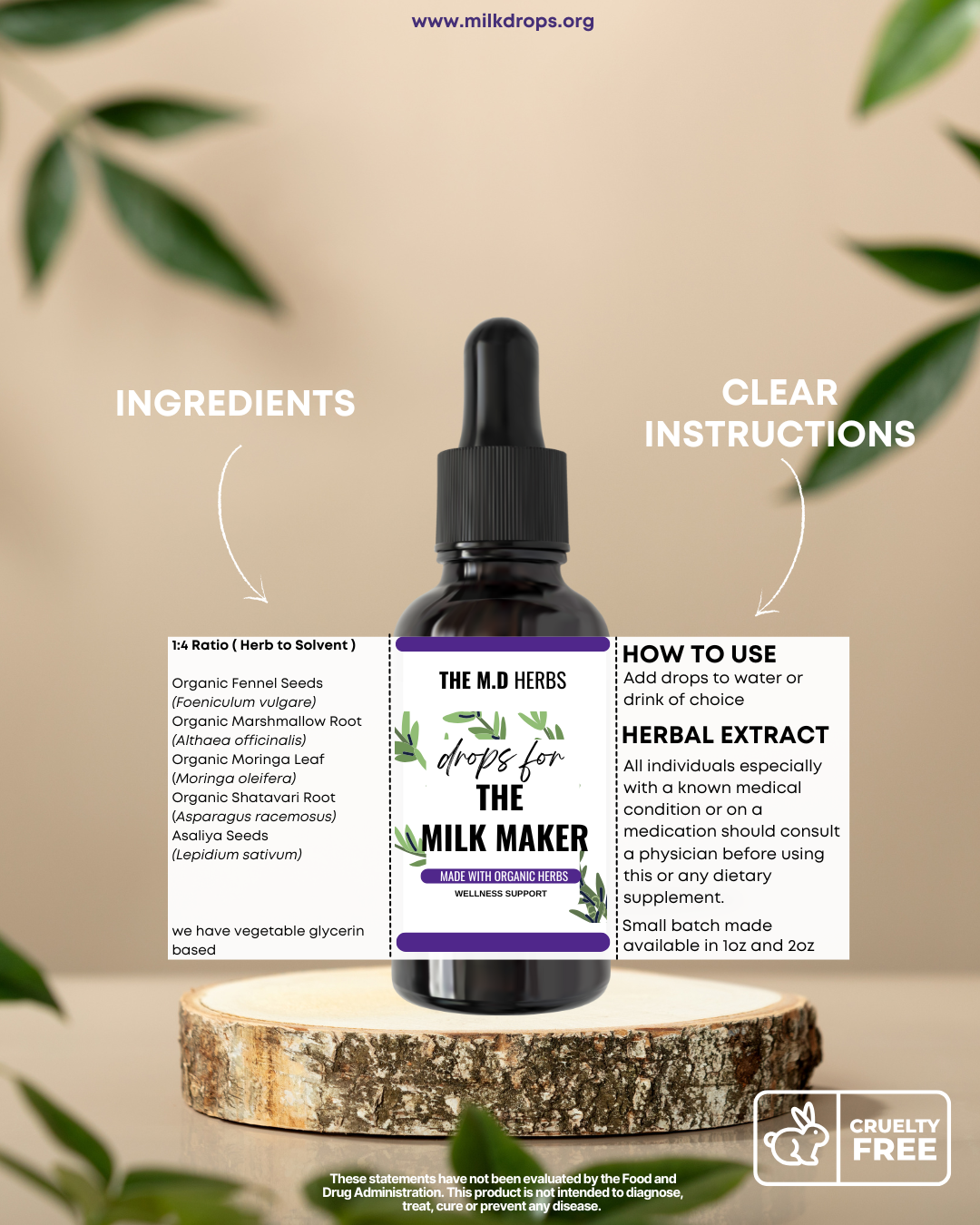
Best for:
Low milk supply that isn’t increasing despite regular feeding or pumping.
If your milk supply isn’t increasing the way you expected, even with consistent feeding or pumping, your body may need additional support to respond.
Milk Maker Drops are designed to support milk production in a more targeted way.
What it supports:
Milk production
Hormonal balance related to lactation
Nutrient support for breast milk production
Why it’s different:
Unlike one-size-fits-all lactation supplements, Milk Maker Drops are designed to support key systems involved in milk production—including hormones, metabolism, and overall lactation function.
Ingredients:
Organic herbal blend with asaliya seeds, marshmallow root, fennel, moringa, and shatavari to enhance milk supply.
Easy-to-use dropper—simply add to water or beverage of choice.
Vegetable glycerin-based, cruelty-free, and crafted in small batches.
How to use:
Use consistently as directed alongside regular feeding or pumping for best results.
Milk supply responds best to consistent support—this is designed to work with your body, not force it.